
Amira Clinic

SCAR CORRECTION

Surgical revision of postoperative and traumatic scars

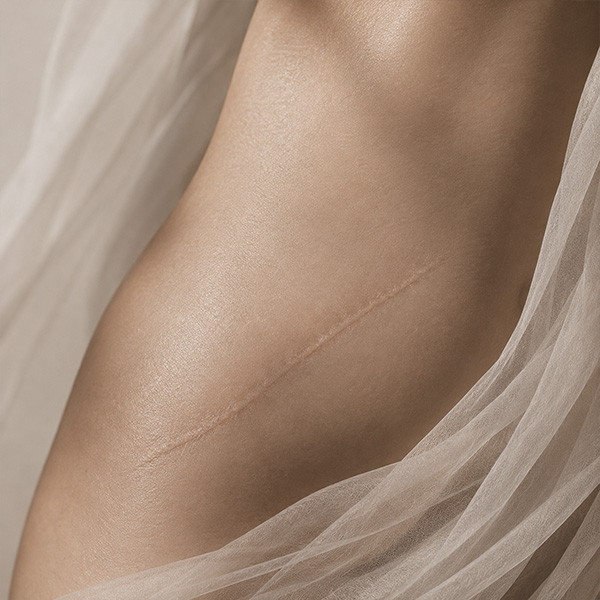
Scars may develop after surgery, injuries, burns, and other forms of skin damage.

Their appearance depends on the depth of the injury, its location, the healing process, and the individual’s tendency to develop scar tissue.

If a scar noticeably affects the appearance of the skin, causes discomfort, or restricts tissue movement, scar revision may be considered.

At Amira, we select the treatment method based on the type of scar, its location, the condition of the surrounding skin, and the patient’s individual characteristics.
l 8

ABOUT SCAR CORRECTION

A scar is a natural result of the healing process after damage to the skin and underlying tissues.

In some cases, a scar becomes barely noticeable. In others, it may be wide, firm, depressed, raised above the skin’s surface, or restrict the movement of surrounding tissues.

Scar correction can improve the appearance and, in some cases, the function of the affected area.

At Amira, we assess not only the scar itself, but also the condition of the surrounding tissues, the cause of its formation, and the characteristics of the healing process.

We do not erase the skin’s history. We help make its marks less noticeable.

CAN A SCAR BE COMPLETELY REMOVED?

No. Surgical scar revision does not mean the complete disappearance of scar tissue.

DURING SURGERY, THE DOCTOR MAY:

• Remove part of the scar tissue;
• Change the direction of the scar;
• Reduce its width;
• Improve its contour;
• Release contracted tissue;
• Adjust the position of the scar;
• Create a neater scar line.

After surgery, the body undergoes another healing process, so a new scar gradually forms. The goal of treatment is to make it less noticeable and more harmonious, rather than to promise its complete disappearance.

WHICH TYPES OF SCARS CAN BE TREATED:

Postoperative Scars

Postoperative scars develop after surgical procedures. In some cases, a scar may become wide, uneven, depressed, or particularly noticeable.

Scar revision may be considered once the tissues have fully healed and the scar has stabilized.

Traumatic scars may develop after cuts, wounds, skin injuries, and other forms of trauma.

The appropriate approach to scar revision depends on the depth of the injury and the direction of the scar.

Burn scars can significantly alter the structure of the skin. In some cases, they become thick and firm, restrict movement, or cause pronounced tissue tightness.

These scars require particularly careful assessment.

Atrophic Scars

An atrophic scar lies below the level of the surrounding skin. These changes may develop, for example, after certain inflammatory conditions or skin injuries.

The choice of treatment depends on the depth and nature of the defect.

Hypertrophic scars are thick, raised scars that extend above the skin’s surface but usually remain within the boundaries of the original injury.

The treatment approach depends on the severity of the scar and its stage of development.

Keloid scars are characterized by excessive growth of scar tissue beyond the boundaries of the original injury.

This is a distinct type of scarring in which surgical removal alone may not be the best option, as there is a risk of the scar recurring.

Therefore, when a keloid scar is suspected, the patient’s medical history and previous treatments must be assessed particularly carefully.

WHEN CAN A SCAR BE REVISED?

Not every scar needs to be treated surgically as soon as it appears. A fresh scar continues to change over time: it may become softer, lighter, and less noticeable. The timing of surgical scar revision is therefore determined individually. If a scar causes functional impairment or significant tissue tightness, earlier correction may be considered.

SCAR REVISION PROCEDURES:

Surgical Scar Revision

During surgical scar revision, the doctor removes or modifies scar tissue and creates a new surgical closure.

The goal is not simply to “cut out the old scar.” It is important to understand **why the scar became noticeable**.

For example, if the problem is related to the direction of skin tension, simply excising the scar again may not be sufficient.

The surgeon therefore selects the technique based on the patient’s anatomy and the direction of the natural skin lines.

Some scars appear to pull the surrounding skin inward. This may be caused by dense adhesions between the superficial and deeper tissues.

In such cases, surgical correction may involve releasing the affected tissues and restoring a more natural skin contour.

In some cases, restoring soft-tissue volume may also be necessary.

If a scar extends above the skin’s surface, the doctor first determines its type.

The treatment approach for hypertrophic or keloid scars differs from that used for a conventional wide postoperative scar.

Therefore, the term **“raised scar removal”** is not sufficient to determine the appropriate treatment method. The nature of the scar tissue must first be assessed.

A scar may become noticeable after plastic surgery for various reasons.

These may include:

• Individual healing characteristics
• The healing process
• Tissue tension
• Inflammation
• Infection
• The location and orientation of the incision

If a scar from a previous operation is a concern, the surgeon first assesses the condition of the tissues and identifies the factors that contributed to its formation.

Only then can the possibility of scar revision be determined.

The following factors are particularly important when treating facial scars:

• The direction of natural skin lines
• Facial expressions and movement
• Skin texture and contour
• Symmetry
• Scar color
• The position of the scar relative to anatomical landmarks

Facial scar revision therefore requires particularly precise planning.

The goal is to make the scar less noticeable during natural facial expressions and under normal lighting conditions.

Scars on the body may be located on the abdomen, chest, back, arms, legs, and other areas.

The choice of treatment depends on:

• Scar size
• Scar depth
• Direction of the scar
• Degree of tissue tension
• Condition of the surrounding skin

In some cases, surgical scar revision may be incorporated into a more extensive procedure.

For example, an old abdominal scar may be removed along with excess skin during abdominoplasty.

A scar following a Caesarean section may be wide, depressed, raised, or associated with tightness in the surrounding tissues.

If the scar has healed unfavorably and causes aesthetic or functional discomfort, a consultation with a plastic surgeon may be appropriate.

Depending on the individual situation, treatment options may include:

• Surgical scar revision
• Release of tethered or depressed tissue
• Changing the direction of the scar
• Combining scar revision with abdominoplasty

ПОПУЛЯРНЫЕ ВОПРОСЫ:

When Will I See the Results?

After surgery, the new scar may initially appear more noticeable than the patient expected. This is normal during the early stages of healing.

Over time, it gradually:

Becomes softer → lightens in color → becomes less prominent → blends more naturally with the surrounding skin.

Scar maturation can take a considerable amount of time. Therefore, it is not appropriate to assess the final result immediately after the stitches are removed.

The timing depends on the type of scar and the reason it developed. In some cases, it is necessary to wait until the scar has matured. However, when functional problems are present, a different approach may be required.

Yes. In some cases, an old scar can be improved through surgical revision or other treatment methods.

In some cases, the appearance and function of the scarred area can be improved. Complex burn scars may require reconstructive surgery.

Can Laser Treatment Help Improve Scars?

Laser treatments can be used to improve certain types of scars. However, they are not suitable for every scar type and do not always replace surgical scar revision.

Recovery time depends on the treatment method and the size of the affected area. After surgical scar revision, the new scar continues to mature for a considerable period following the procedure.

Some scars can be treated using conservative, injectable, or energy-based methods. The suitability of these approaches depends on the type of scar.

There is no fixed age for surgery. The decision is made based on anatomical characteristics, tissue condition, and medical indications.

PRICING:

Scar Excision, per cm²

from 85 000 ₸

Общая анестезия (по показаниям)

from 500 000 ₸

Scroll to Top